
Features
Why Choose CHENGHAO?

We Have The Best Solutions for Your Business
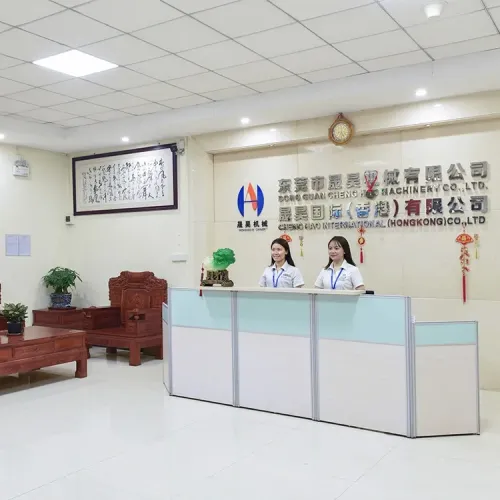
Dongguan Chenghao Machinery Co., Ltd. was founded in 2007, is a collection of R & D, design, manufacturing, sales, technical services as one of the modern production enterprises. The company mainly produces plastic welding equipment, including high frequency machine, automatic blister sealing machine, ultrasonic welding machine, hot melt machine, etc.
Since its establishment, Chenghao has been adhering to the business philosophy of "quality first, customer first, continuous innovation". We have passed the ISO9001:2015 quality management system certification, and the products are produced in strict accordance with international standards. At the same time, the company has a group of professional technical personnel, has rich experience in mechanical design and production, can provide customers with a full range of technical support and solutions.
Our products are widely used in automotive interior, medical supplies packaging, footwear, bags, household goods, industrial film, carpets, sun visors and other fields, and exported to many countries and regions, won the trust and praise of customers.
Chenghao Machinery will continue to uphold the spirit of craftsmanship, constantly improve product quality and technical level, to provide global customers with more advanced, efficient and reliable plastic welding equipment and solutions.
Ultrasonic Machine: Complete Guide to Ultrasonic Welding and Sealing Technology
An ultrasonic machine uses high-frequency acoustic vibration to join, seal, cut, or emboss thermoplastic materials without adhesives, heat, or mechanical fasteners. From compact bench units for small workshops to fully automated multi-head production cells for automotive and medical manufacturing, ultrasonic technology has become an essential precision joining tool across virtually every industrial sector. This guide covers how ultrasonic machines work, what they can do, and how to select the right system for your application.
How an Ultrasonic Machine Works
Ultrasonic welding generates heat through friction at the molecular level. The process works as follows:
- Electrical signal generation — The ultrasonic generator converts 50/60 Hz AC power into a high-frequency electrical signal (typically 20, 35, or 40 kHz).
- Piezoelectric transduction — The transducer (piezoelectric ceramic converter) transforms the electrical signal into mechanical longitudinal vibration at the same frequency.
- Amplitude magnification — The booster increases vibration amplitude from 4–10 µm at the transducer to 15–120 µm at the sonotrode tip.
- Heat generation at joint — The sonotrode tip applies controlled vibration force to the part interface. Friction between the two material surfaces generates localized heat, melting the thermoplastic at the joint within milliseconds.
- Bond formation — Clamping force holds the parts together while the vibration stops. The melted material fuses and cools, forming a molecular bond in 0.05–3 seconds.
Frequency and Power Specifications
| Frequency | Typical Power | Amplitude Range | Typical Applications |
|---|---|---|---|
| 15 kHz | 2,000 – 6,000 W | 30 – 150 µm | Very large parts, heavy-gauge materials |
| 20 kHz | 500 – 4,200 W | 15 – 120 µm | General industrial welding, automotive, packaging |
| 30 kHz | 300 – 1,500 W | 5 – 50 µm | Medium precision parts, mid-sized electronics |
| 35 kHz | 200 – 2,000 W | 3 – 40 µm | Precision parts, medical devices, electronics |
| 40 kHz | 100 – 800 W | 2 – 25 µm | Micro-parts, delicate assemblies, very fine sealing |
Main Types of Ultrasonic Processes
| Process Type | Description | Application Example |
|---|---|---|
| Ultrasonic welding | Bonding of rigid thermoplastics with designed energy director | Automotive housing, electronics enclosure |
| Ultrasonic sealing | Bonding of flexible films and thin sheets | Food pouch, pharmaceutical blister pack |
| Ultrasonic cutting | Vibration-reduced cutting with simultaneous sealing of cut edge | Food cutting, textile trimming |
| Ultrasonic spot welding | Discrete point bonding of overlapping sheets | Nonwoven garment seams |
| Ultrasonic staking / swaging | Deforming plastic to capture metal pins or studs | PCB assembly, metal insert fastening |
| Ultrasonic insertion | Embedding metal threaded inserts into plastic holes | Automotive boss assembly |
Material Compatibility
| Material | Weldability | Recommended Frequency |
|---|---|---|
| ABS | Excellent | 20 kHz |
| PC (Polycarbonate) | Excellent | 20 / 35 kHz |
| PP (Polypropylene) | Good (requires energy director) | 20 kHz high amplitude |
| PE (Polyethylene) | Moderate | 20 kHz |
| PS (Polystyrene) | Excellent | 20 / 35 kHz |
| Nylon (PA) | Good | 20 kHz |
| PMMA (Acrylic) | Good | 35 kHz low amplitude |
Key Features of Modern Ultrasonic Machines
- DSP digital generator — precision frequency control with sub-Hz resolution
- Auto-frequency tracking — continuous resonance adjustment under varying load
- Servo-electric actuator — programmable force, velocity, and position profiles
- Real-time weld monitoring — energy, time, distance, and force data capture and logging
- Multi-language HMI — 5–10" color touch screen with English, Chinese, Spanish, and more
- Recipe management — 500–1,000 weld parameter recipes stored internally
- Industry 4.0 interfaces — Ethernet/IP, Modbus TCP, PROFINET available on request
FAQ: Ultrasonic Machine
Q1: What is the difference between 20 kHz and 35 kHz ultrasonic machines?
20 kHz produces higher amplitude vibrations and is better suited for larger parts, thicker sections, and semi-crystalline plastics. 35 kHz operates at lower amplitude, producing less vibration transfer and fewer stress marks — preferred for small, delicate parts, cosmetic surfaces, and precision electronics assemblies. 20 kHz is the dominant industrial frequency; 35 kHz is the dominant precision frequency.
Q2: What is the typical cycle time for an ultrasonic welding machine?
Weld time ranges from 0.05 to 3 seconds depending on material, part thickness, and required bond strength. Including clamping, triggering, weld, and release, a complete cycle on a standard bench machine is typically 0.5 to 4 seconds. Automated rotary systems can achieve 20–60 cycles per minute on small parts.
Q3: Can an ultrasonic machine weld dissimilar plastics?
Dissimilar plastics can be welded when they share compatible melting temperatures and molecular characteristics. Common successful combinations include ABS to ABS/PC, PS to ABS, PP to PP composites, and PC to PMMA (with adjusted parameters). Incompatible pairs such as PP to ABS generally produce weak bonds and are not recommended for structural applications.
Q4: How long does a sonotrode last before replacement?
Titanium sonotrodes typically last 500,000 to 2,000,000 cycles depending on frequency, amplitude setting, and material hardness. Surface wear is the primary failure mode; regular inspection every 200,000 cycles is recommended. Aluminum sonotrodes are more economical but have shorter service lives of 100,000–500,000 cycles.
Q5: Is special ventilation required for ultrasonic plastic welding?
Standard workshop ventilation is sufficient for routine plastic welding of commodity polymers. For POM (acetal), PVC, or other materials that produce formaldehyde or hydrogen chloride gas at elevated temperatures, local exhaust ventilation (LEV) at the weld zone is mandatory. Consult Chenghao's application team for material-specific guidance.
Q6: How do I select the right ultrasonic machine for my application?
Key selection criteria are: part size (determines power and frequency), material (determines amplitude and tooling), required production rate (determines automation level), weld strength requirement (determines joint design and parameter range), and budget. Chenghao's application engineers provide free technical consultation to match the correct system to your requirements.
Find the Right Ultrasonic Machine for Your Needs
Chenghao Machinery supplies a complete range of ultrasonic welding, sealing, cutting, and textile bonding systems. Contact us with your application details for a free technical recommendation and factory-direct price.
Email: sales11@chenghaointernational.com | WhatsApp: +86 15817655869
Featured Products
Collection about CHENGHAO
User Reviews
What users say about CHENGHAO
Frequently Asked Question
Do you have any question?
An ultrasonic machine works by converting high-frequency electrical energy into mechanical vibrations. These vibrations are channeled through a tool called a horn (or sonotrode), which is brought into contact with the plastic parts. The intense vibration creates localized, intermolecular friction, which generates rapid, precise heat. This heat melts the plastic at the joint interface, and when the vibration stops, the molten material solidifies under pressure, creating a strong, permanent, monolithic bond.
The primary advantages of a CHENGHAO ultrasonic machine are speed, precision, and cleanliness. Welds are typically completed in under a second, dramatically increasing production throughput. The process is highly controllable, leading to extremely consistent results and a flawless cosmetic finish with no flash. Furthermore, it's a clean process that uses no consumables like glue or solvents, reducing operational costs and environmental impact.
An ultrasonic machine is incredibly versatile and works best with most rigid and semi-rigid thermoplastics. It excels with materials like ABS, polystyrene (PS), polycarbonate (PC), acrylic (PMMA), and nylon (PA). While some softer plastics can be challenging, our expert team at CHENGHAO can assess your specific material and part design to determine the optimal configuration for a successful weld with your ultrasonic machine.
Yes, providing custom solutions is a core part of our business. CHENGHAO specializes in engineering a custom ultrasonic machine to meet unique production needs. More importantly, we design and manufacture the critical tooling—the horns, boosters, and fixtures—in-house. This ensures that the entire ultrasonic machine system is perfectly tuned to your product for maximum efficiency and flawless weld quality.
An ultrasonic machine is a remarkably versatile platform. Beyond simple lap welds, the technology is expertly used for a range of other assembly applications. These include staking (melting and reforming a plastic stud to lock another component in place), inserting (embedding a metal component like a threaded insert into plastic), swaging (capturing a component by reforming a plastic ridge), and spot welding. A single CHENGHAO ultrasonic machine can often perform multiple different tasks on your assembly line.
As an ISO 9001:2015 certified manufacturer with nearly two decades of experience since 2007, CHENGHAO builds every ultrasonic machine for industrial longevity. We use high-quality digital generators for stable power output, precision-grade transducers, and robust press mechanics designed for millions of cycles in a demanding production environment. Investing in a CHENGHAO ultrasonic machine is an investment in consistent, reliable, long-term performance.
Our updates and blog posts
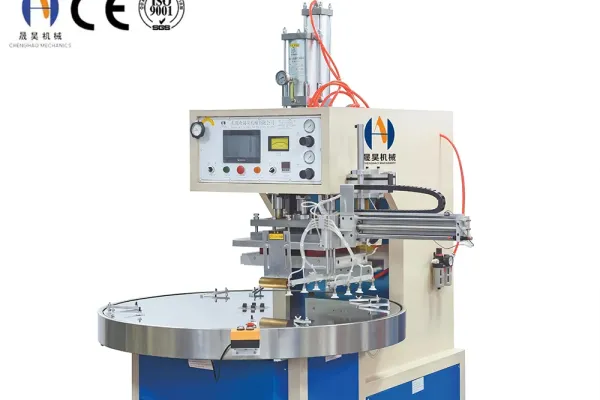
High Frequency Machine Solutions for Modern Manufacturing
Discover how the High Frequency Machine improves strength, speed, and efficiency in manufacturing. Learn its benefits, applications, and why businesses choose Chenghao.
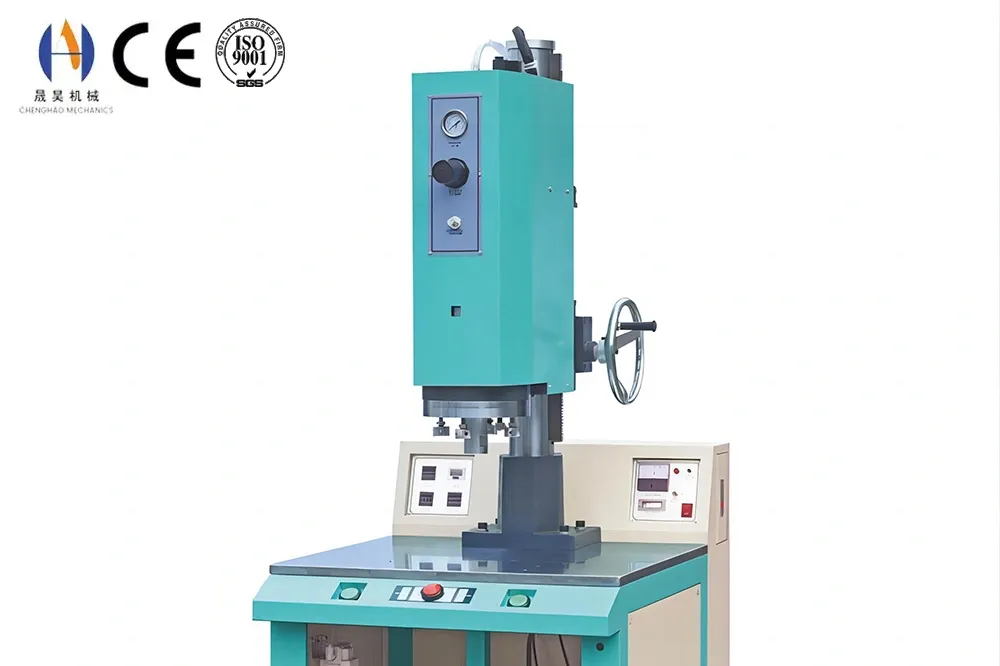
High-Quality Ultrasonic Machine for Welding and Packaging
Discover the benefits of Ultrasonic Machine technology in packaging, textiles, and manufacturing. Chenghao provides reliable Ultrasonic Machine solutions for global industries.
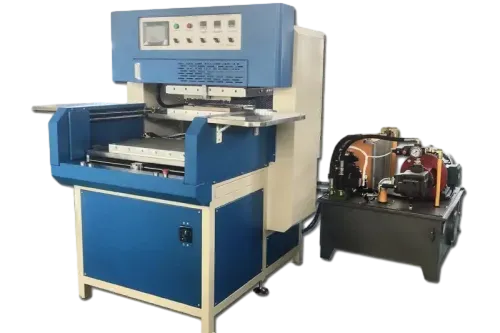
Dedicated Machine for Precision and Efficiency in Manufacturing
Discover how a Dedicated Machine boosts efficiency, quality, and cost savings in modern manufacturing with tailored solutions.