
Introduction
Blister packaging is widely used for electronics, hardware, medical products, consumer goods, toys, and retail products. It provides product visibility while helping protect items from dust, impact, and handling damage.
However, blister packaging quality depends on much more than the forming machine itself. Problems with heating, material distribution, mold design, forming pressure, trimming, or sealing can lead to visible defects and production losses.
For manufacturers, identifying the root causes of blister packaging defects is essential for reducing scrap, improving production efficiency, and maintaining consistent product quality.
This guide examines common blister packaging defects, their possible causes, and practical ways to prevent them.
What Causes Blister Packaging Defects?
Blister packaging involves several interconnected processes:
-
Plastic sheet preparation
-
Heating
-
Forming
-
Cooling
-
Trimming
-
Sealing
A problem in any stage can affect the final package.
Common defect categories include:
-
Forming defects
-
Thickness variation
-
Surface defects
-
Dimensional problems
-
Trimming defects
-
Sealing problems
Before changing machine parameters, manufacturers should identify which stage is responsible for the defect.
1. Uneven Wall Thickness
Uneven wall thickness is one of the most common problems in thermoformed blister packaging.
Some areas may become excessively thin while other areas remain relatively thick.
Possible Causes
-
Uneven sheet heating
-
Complex mold geometry
-
Excessive forming depth
-
Improper material distribution
-
Incorrect forming conditions
How to Prevent It
Manufacturers can improve wall thickness consistency by:
-
Optimizing heating zones
-
Using appropriate sheet thickness
-
Improving mold geometry
-
Controlling forming temperature
-
Testing material distribution before mass production
Uniform heating is particularly important because different areas of the sheet may need different amounts of heat depending on the mold structure.
2. Incomplete Forming
Incomplete forming occurs when the heated plastic does not fully conform to the mold.
The result may include:
-
Missing details
-
Shallow cavities
-
Rounded corners
-
Incomplete surface reproduction
Possible Causes
-
Insufficient forming temperature
-
Inadequate vacuum
-
Insufficient pressure
-
Poor mold venting
-
Material not properly positioned
Solutions
Check:
-
Heating temperature
-
Vacuum performance
-
Pressure system
-
Mold venting
-
Material condition
For complex shapes, pressure forming may provide better detail than vacuum forming alone.
3. Wrinkles and Folds
Wrinkles can appear on the surface or around deep cavities.
Possible Causes
-
Uneven heating
-
Improper material positioning
-
Excessive sheet movement
-
Poor mold design
-
Incorrect forming conditions
Prevention
Manufacturers should:
-
Improve sheet positioning
-
Optimize heating distribution
-
Review mold geometry
-
Adjust forming parameters
-
Maintain consistent material quality
Wrinkles should be investigated before they become a recurring production problem.
4. Webbing
Webbing occurs when excess plastic material forms unwanted folds between adjacent cavities or around complex mold features.
It is particularly common when multiple cavities are placed close together.
Possible Causes
-
Poor cavity arrangement
-
Insufficient material control
-
Improper heating
-
Excessive material movement
-
Inadequate mold design
How to Reduce Webbing
Possible solutions include:
-
Redesigning cavity spacing
-
Adjusting heating zones
-
Improving material distribution
-
Modifying mold geometry
-
Optimizing forming conditions
Mold design is often one of the most important factors when addressing persistent webbing.
5. Cracks and Material Splitting
Cracks can occur when the plastic is stretched beyond its forming capability.
Possible Causes
-
Material temperature too low
-
Excessive forming depth
-
Insufficient material thickness
-
Poor material quality
-
Sharp mold corners
Prevention
Manufacturers should evaluate:
-
Sheet thickness
-
Forming temperature
-
Mold radius
-
Cavity depth
-
Material characteristics
Rounded transitions and appropriate mold geometry can help reduce excessive material stress.
6. Excessive Thinning at Corners
Corners and deep-draw areas often experience greater stretching than flat sections.
This can produce very thin areas that may weaken the package.
Possible Causes
-
Deep cavity design
-
Poor material distribution
-
Excessive forming ratio
-
Incorrect heating profile
Solutions
Manufacturers can consider:
-
Increasing initial sheet thickness
-
Optimizing heating
-
Adjusting mold geometry
-
Using suitable forming technology
-
Reviewing cavity depth
For demanding applications, material distribution should be evaluated during mold and product development.
7. Surface Marks and Poor Appearance
Blister packaging is often used for retail products, so visual quality is important.
Surface problems may include:
-
Scratches
-
Dull areas
-
Uneven texture
-
Unwanted marks
-
Cloudiness
Possible Causes
-
Dirty mold surfaces
-
Excessive heating
-
Material contamination
-
Improper cooling
-
Damaged tooling
Prevention
Regularly inspect:
-
Plastic sheets
-
Mold surfaces
-
Heating systems
-
Forming tools
-
Production environment
Keeping molds clean and properly maintained can significantly improve surface quality.
8. Bubbles and Air Trapping
Air bubbles or trapped air may appear between the plastic and mold.
Possible Causes
-
Poor mold venting
-
Insufficient vacuum
-
Contamination
-
Moisture
-
Improper material handling
Solutions
Check:
-
Vacuum lines
-
Mold vent holes
-
Material storage
-
Sheet cleanliness
-
Vacuum pressure
Effective air removal is particularly important for detailed thermoformed products.
9. Deformation After Forming
A blister may look correct immediately after forming but deform during cooling or after removal from the mold.
Possible Causes
-
Insufficient cooling
-
Uneven material stress
-
Excessive forming temperature
-
Poor mold temperature control
-
Premature demolding
Prevention
Manufacturers should establish stable:
-
Heating conditions
-
Cooling conditions
-
Mold temperature
-
Demolding procedures
Allowing the formed plastic to stabilize before removal can help improve dimensional accuracy.
10. Inaccurate Dimensions
Dimensional variation can cause problems during:
-
Sealing
-
Product insertion
-
Assembly
-
Automated packaging
Possible Causes
-
Material thickness variation
-
Unstable forming conditions
-
Mold wear
-
Temperature fluctuations
-
Inconsistent cooling
Solutions
Manufacturers should regularly monitor:
-
Product dimensions
-
Mold condition
-
Material thickness
-
Machine temperature
-
Forming pressure
Statistical process control can be useful for high-volume production.
11. Poor Trimming Quality
After forming, the blister usually needs to be trimmed.
Poor trimming can create:
-
Uneven edges
-
Burrs
-
Excess material
-
Incorrect dimensions
Possible Causes
-
Worn cutting tools
-
Improper alignment
-
Poor mold design
-
Incorrect cutting parameters
Prevention
Inspect trimming tools regularly and ensure that the cutting process is properly aligned with the formed product.
12. Poor Blister Sealing
Forming quality is only part of the packaging process. The blister must also be sealed correctly.
Common sealing problems include:
-
Weak bonding
-
Incomplete sealing
-
Uneven sealing
-
Material damage
-
Peeling
Possible Causes
-
Incorrect temperature
-
Insufficient pressure
-
Incorrect sealing time
-
Incompatible materials
-
Poor tooling
Manufacturers should select the sealing method based on the blister material and backing material.
How to Prevent Blister Packaging Defects
Preventing defects is more effective than correcting them after production.
1. Control Raw Materials
Maintain consistent:
-
Material thickness
-
Material formulation
-
Sheet quality
-
Storage conditions
2. Optimize Heating
Heating should provide an appropriate temperature profile across the sheet.
Avoid assuming that one temperature setting is suitable for every product.
3. Maintain the Vacuum System
Check:
-
Vacuum pressure
-
Vacuum lines
-
Connections
-
Valves
-
Mold venting
A small vacuum leak can affect forming consistency.
4. Maintain Molds and Tooling
Regularly inspect molds for:
-
Wear
-
Damage
-
Contamination
-
Blocked vents
-
Dimensional changes
Tooling condition has a direct impact on forming quality.
5. Standardize Machine Parameters
Document important parameters such as:
-
Heating temperature
-
Heating time
-
Vacuum conditions
-
Pressure
-
Cooling time
-
Trimming settings
A standardized process makes production easier to control.
A Practical Blister Packaging Quality Checklist
Before starting mass production, manufacturers should verify:
-
Material specification
-
Sheet thickness
-
Heating uniformity
-
Mold condition
-
Vacuum performance
-
Forming pressure
-
Cooling performance
-
Product dimensions
-
Trimming quality
-
Sealing strength
Testing these factors early can prevent large quantities of defective packaging.
When Should You Modify the Mold?
Not every forming problem can be solved by changing machine parameters.
If a defect repeatedly appears in the same area despite stable processing conditions, the mold design may need to be reviewed.
Potential mold modifications include:
-
Adjusting cavity geometry
-
Improving venting
-
Changing draft angles
-
Increasing corner radii
-
Modifying cavity spacing
Mold optimization should be performed together with machine and material evaluation.
Choosing the Right Blister Forming Equipment
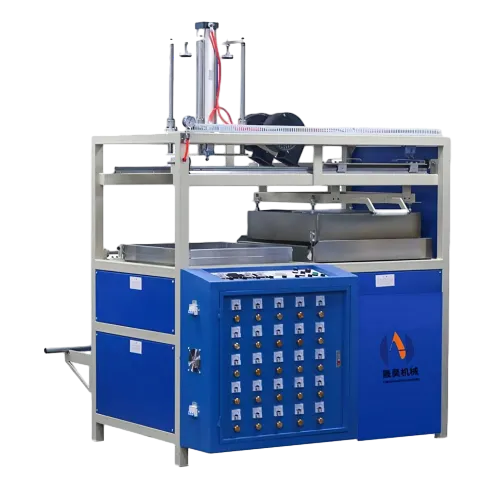
A reliable blister forming machine should provide stable control over:
-
Heating
-
Forming
-
Vacuum
-
Pressure
-
Cooling
For manufacturers producing complex packaging, equipment should also support appropriate tooling and process customization.
The machine should be selected based on:
-
Product size
-
Material type
-
Sheet thickness
-
Cavity design
-
Production volume
-
Required automation
Why Choose Chenghao for Blister Packaging Solutions?
Chenghao Machinery provides equipment solutions for plastic forming, sealing, and welding applications.
Its product capabilities include:
-
Blister forming machines
-
plastic welding equipment
-
Customized machinery
For manufacturers experiencing repeated blister packaging defects, the correct solution may involve a combination of material analysis, machine parameter optimization, mold improvement, and equipment configuration.
Chenghao can help evaluate the production requirements and develop a suitable packaging solution.
Conclusion
Blister packaging defects can result from many different factors, including material variation, uneven heating, poor vacuum performance, mold design, cooling conditions, trimming, and sealing.
The most effective way to improve quality is to treat the entire forming process as one system.
Manufacturers should focus on:
-
Consistent raw materials
-
Stable heating
-
Reliable vacuum and pressure
-
Proper mold design
-
Controlled cooling
-
Accurate trimming
-
Reliable sealing
-
Preventive equipment maintenance
By systematically controlling these factors, manufacturers can reduce scrap, improve packaging appearance, and achieve more consistent production.
Contact Chenghao Machinery to discuss your blister packaging challenges and find a forming or sealing solution tailored to your production requirements.