
Introduction
Choosing the right plastic welding machine is an important decision for manufacturers working with flexible thermoplastic materials. PVC and TPU are widely used in products such as packaging, inflatable goods, medical products, synthetic leather, protective covers, and industrial fabrics, but their welding characteristics are not identical.
A machine that performs well with one material may require different settings, tooling, or even a different welding technology for another. Factors such as material thickness, product structure, welding area, production volume, and required sealing strength all influence the appropriate equipment configuration.
For manufacturers considering a PVC welding machine or TPU welding machine, understanding these factors before purchasing can help reduce production problems, improve welding consistency, and achieve better long-term equipment value.
Why Material Selection Matters in Plastic Welding
Not all thermoplastics respond to welding energy in the same way.
The welding behavior of a material depends on characteristics such as:
-
Chemical composition
-
Dielectric properties
-
Melting behavior
-
Thickness
-
Flexibility
-
Surface structure
PVC and TPU can both be used in high frequency welding applications, but the actual welding process should be developed around the specific material formulation and product design.
This is why manufacturers should evaluate the material and finished product together rather than selecting a machine based only on the material name.
PVC Welding: What Manufacturers Should Consider
PVC is widely used in flexible plastic products and packaging because of its flexibility, processability, and availability.
Common PVC welding applications include:
-
PVC bags
-
Blister packaging
-
Inflatable products
-
Tarpaulins
-
Synthetic leather
-
Protective covers
-
Advertising materials
For suitable PVC formulations, high frequency welding can provide strong and consistent seams.
However, PVC formulations can vary significantly. Plasticizer content, thickness, surface coatings, and additives can affect welding behavior.
Before selecting equipment, manufacturers should test the actual PVC material intended for production.
TPU Welding: What Makes It Different?
TPU, or thermoplastic polyurethane, is valued for its combination of flexibility, abrasion resistance, and mechanical performance.
TPU is used in applications such as:
-
Inflatable products
-
Medical products
-
Protective covers
-
Flexible containers
-
Outdoor equipment
-
Technical films
Some TPU materials can be processed using high frequency welding, while other product designs may be better suited to alternative welding technologies.
Therefore, manufacturers should not assume that every TPU product can use exactly the same welding parameters as PVC.
Material testing is particularly important when TPU film thickness, formulation, or surface treatment changes.
High Frequency Welding for PVC and TPU
High frequency welding is an attractive solution for suitable PVC and TPU products because it generates heat within the material through a high frequency electromagnetic field.
The process generally includes:
-
Positioning the material
-
Applying pressure
-
Applying high frequency energy
-
Holding the material under pressure
-
Cooling the welded area
The result is a bonded seam without requiring traditional liquid adhesives.
High frequency welding can be particularly useful when manufacturers need:
-
Continuous seams
-
Airtight sealing
-
Liquid-tight sealing
-
Decorative welding
-
Repeatable production
Key Factors When Choosing a Plastic Welding Machine
1. Material Compatibility
The first question should always be whether the material is compatible with the proposed welding technology.
For PVC and TPU applications, manufacturers should provide the machine supplier with:
-
Material type
-
Material formulation if available
-
Thickness
-
Layer structure
-
Surface coating information
A professional supplier can then determine whether high frequency welding or another technology is more appropriate.
2. Product Size
Product dimensions directly influence machine configuration.
A small plastic component may require a compact welding area, while a large flexible product may need a larger working table and welding system.
Consider:
-
Product length
-
Product width
-
Welding area
-
Number of welding lines
-
Required positioning accuracy
Choosing a machine with an appropriate working area prevents unnecessary limitations during production.
3. Welding Area
The size and shape of the welding area are critical.
For example, a product may require:
-
A narrow sealing line
-
A large continuous seam
-
Multiple welding points
-
A complex contour
The electrode or welding tool must be designed to match the required pattern.
Large welding areas may require different machine power and tooling configurations than small localized welds.
4. Material Thickness
Material thickness affects heat transfer and welding behavior.
Thin films may require careful control to prevent:
-
Overheating
-
Burn marks
-
Excessive deformation
Thicker materials may require sufficient energy and pressure to achieve reliable bonding.
Manufacturers should therefore provide actual material thickness rather than simply describing the material as "PVC" or "TPU."
5. Required Welding Strength
Different products have different performance requirements.
A decorative PVC product may primarily require good appearance, while an inflatable product may require an airtight and mechanically strong seam.
Manufacturers should identify whether the finished product needs:
-
Mechanical strength
-
Airtight sealing
-
Liquid resistance
-
Peel resistance
-
Long-term durability
The welding process should then be developed around the required performance.
6. Production Volume
Production capacity should be considered before purchasing equipment.
For low-volume production, a manually operated machine may be sufficient.
For high-volume manufacturing, manufacturers may benefit from:
-
Automated material feeding
-
Automatic positioning
-
Programmable controls
-
Integrated inspection
-
Automated unloading
The goal is to match the machine configuration with the required production volume instead of paying for unnecessary automation.
7. Electrode Design
For high frequency plastic welding, electrode design is extremely important.
The electrode determines the shape and location of the welding area.
A customized electrode may be required for:
-
Complex product contours
-
Decorative patterns
-
Multiple welding lines
-
Precise sealing dimensions
The electrode should be designed according to the actual product rather than selected as a generic component.
8. Machine Frequency and Power
High frequency welding equipment is available in different configurations.
The appropriate machine should provide sufficient energy for the intended material and welding area while allowing stable process control.
Machine selection should consider:
-
Operating frequency
-
Output power
-
Welding area
-
Material characteristics
-
Production requirements
Higher power is not automatically better. Excessive energy can damage the material, while insufficient energy can produce weak welds.
9. Pressure and Mechanical System
A stable pressing system is essential for consistent welding.
The machine should provide controlled movement and repeatable pressure during the welding cycle.
Poor mechanical stability can cause:
-
Uneven welding
-
Inconsistent seam width
-
Product deformation
-
Variation between production batches
When evaluating a machine, manufacturers should consider both the high frequency system and the mechanical structure.
10. Cooling System
Cooling is an important part of the welding cycle.
After high frequency energy is removed, the welded material needs to remain under controlled conditions while the joint cools and solidifies.
An effective cooling system can help improve:
-
Dimensional stability
-
Welding consistency
-
Product appearance
-
Production cycle control
PVC Welding Machine vs TPU Welding Machine
Although the same high frequency machine platform may potentially be used for both materials, the actual process requirements can differ.
| Factor | PVC | TPU |
|---|---|---|
| Common Applications | Packaging, inflatable products, synthetic leather | Medical products, outdoor goods, flexible films |
| High Frequency Welding | Widely used for suitable formulations | Possible for suitable formulations |
| Material Variation | Formulation can vary | Formulation can vary |
| Parameter Development | Required | Required |
| Tooling | Application-specific | Application-specific |
The important point is that the machine should be selected based on the complete application, not simply the material category.
When Should You Consider Ultrasonic Welding Instead?
High frequency welding is not the best solution for every plastic product.
Ultrasonic welding may be more suitable when working with:
-
Rigid plastic components
-
Small assemblies
-
Localized joints
-
Injection-molded parts
-
Products requiring very short welding cycles
For example, an electronic plastic housing may be better suited to ultrasonic welding, while a flexible PVC bag may be better suited to high frequency welding.
The product structure should therefore be evaluated before selecting equipment.
Manual vs Automatic Plastic welding machines
Manual Machines
Manual equipment can be suitable for:
-
Small production volumes
-
Multiple product models
-
Flexible production
-
Applications requiring operator control
Advantages include:
-
Lower initial investment
-
Simple operation
-
Flexible product changeover
Automatic Machines
Automatic equipment is more appropriate for:
-
Large production volumes
-
Standardized products
-
Repetitive welding processes
-
Integrated production lines
Automation can include:
-
Automatic feeding
-
Positioning
-
Welding
-
Inspection
-
Unloading
The right automation level depends on production requirements and return on investment.
What Should You Provide to a Machine Manufacturer?
When requesting a plastic welding machine quotation, providing detailed product information can significantly improve the equipment recommendation.
Useful information includes:
Product Information
-
Product drawings
-
Product dimensions
-
Product photographs
-
Welding area
Material Information
-
PVC or TPU specification
-
Material thickness
-
Number of layers
-
Surface treatment
Production Information
-
Target output
-
Working hours
-
Current production method
-
Desired automation level
Quality Requirements
-
Required welding strength
-
Airtightness or leak resistance
-
Appearance requirements
-
Inspection standards
The more complete the information, the more accurately the machine configuration can be evaluated.
Common Mistakes When Buying a Plastic Welding Machine
Choosing Based Only on Machine Price
A low purchase price does not necessarily mean lower production costs.
Consider the complete lifecycle cost, including:
-
Tooling
-
Energy consumption
-
Maintenance
-
Downtime
-
Labor
-
Scrap
Selecting Power Without Testing
Choosing a machine solely because it has a higher power rating can lead to unnecessary investment or unsuitable process conditions.
Actual product testing is more meaningful than comparing power numbers alone.
Ignoring Tooling
A suitable machine with poorly designed tooling may still produce inconsistent results.
The electrode, fixture, and product positioning system should be considered part of the complete welding solution.
Not Testing the Actual Material
Sample testing should use the same material specification intended for mass production whenever possible.
Different formulations can behave differently during welding.
Why Choose Chenghao for Plastic Welding Equipment?
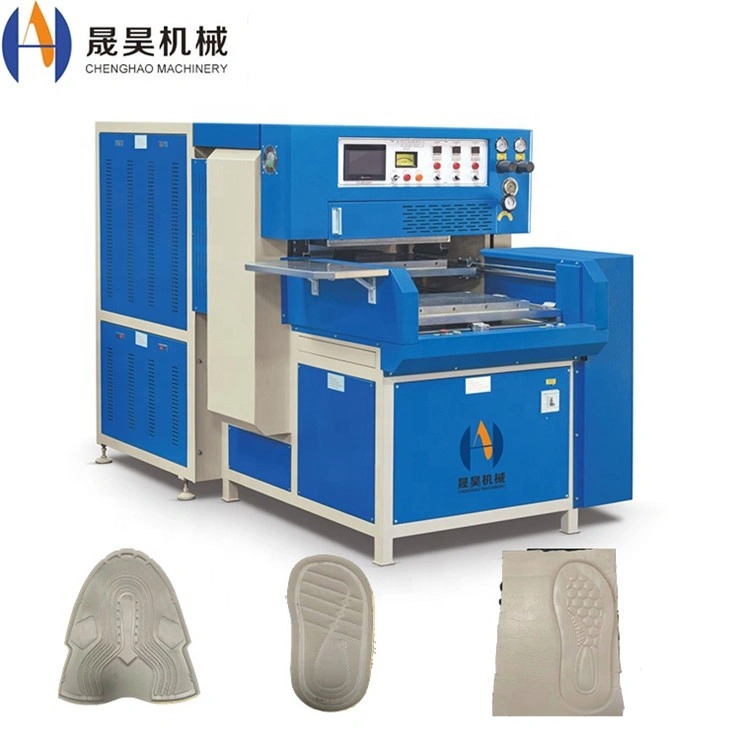
Chenghao Machinery provides equipment and customized solutions for plastic welding and related processing applications.
Its product portfolio includes:
-
High frequency machines
-
Plastic welding machines
For PVC and TPU applications, Chenghao can evaluate the material, product structure, welding requirements, and production volume to develop an appropriate equipment configuration.
Customized tooling and dedicated machine solutions can also be considered when standard equipment does not fully meet production requirements.
Conclusion
Choosing the right plastic welding machine requires more than identifying whether the product is made from PVC or TPU.
Manufacturers should evaluate:
-
Material properties
-
Product dimensions
-
Welding area
-
Material thickness
-
Required welding strength
-
Production volume
-
Tooling requirements
-
Automation level
-
Machine power and mechanical stability
For suitable PVC and TPU applications, high frequency welding can provide strong, repeatable, and efficient bonding. For rigid plastic assemblies, ultrasonic welding may offer a better solution.
The best equipment is the one that matches the complete production process and delivers consistent results at the required production volume.
Contact Chenghao Machinery to discuss your PVC or TPU welding application and find the right plastic welding machine for your production needs.