
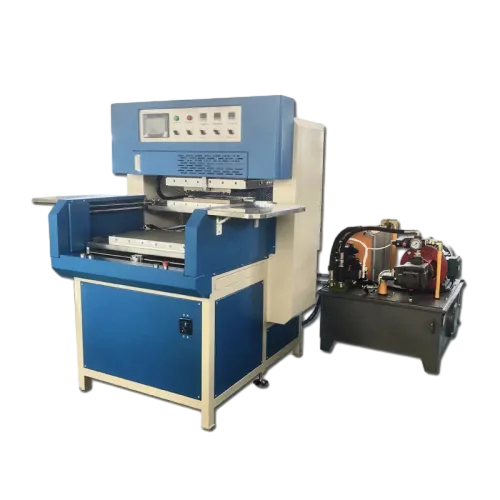
As manufacturing becomes more specialized and efficiency-driven, standard equipment is often no longer sufficient. A dedicated machine is designed to perform a specific task with maximum precision and speed, making it an essential solution for companies aiming to streamline production and reduce operational complexity.
By focusing on a single process, a dedicated system delivers higher consistency, lower error rates, and improved overall productivity compared to general-purpose machinery.
What Defines a Dedicated Machine?
A Dedicated Machine is engineered for one particular application, product, or production step. Unlike flexible machines that handle multiple tasks, it is optimized for a fixed workflow, ensuring stable and repeatable performance.
Typical uses include:
- Product-specific welding or sealing
- Customized forming or cutting
- Automated assembly processes
- Specialized packaging operations
This targeted design allows manufacturers to achieve better efficiency and control.
Why Manufacturers Choose Dedicated Machines
The shift toward automation and mass production has increased the demand for Dedicated Machine solutions.
Maximum Process Efficiency
Because the machine is tailored to one function, it eliminates unnecessary adjustments and reduces cycle time.
High Repeatability
A Dedicated Machine ensures consistent output quality, which is crucial for large-scale production.
Reduced Human Intervention
Automation features minimize manual operation, lowering labor costs and reducing the risk of human error.
Process Stability
Dedicated systems are less prone to variation, ensuring reliable performance over long production runs.
Applications of Dedicated Machines
A Dedicated Machine can be applied across a wide range of industries depending on production needs.
Packaging Industry
Used for specific packaging formats such as blister sealing, labeling, or carton forming, ensuring high-speed and uniform output.
Automotive Manufacturing
Applied in component assembly, plastic welding, and interior part production where precision and consistency are essential.
Medical Industry
Designed for sterile product assembly, medical bag sealing, and device manufacturing that require strict quality control.
Electronics Industry
Used for assembling delicate components such as connectors, housings, and battery systems with high accuracy.
Consumer Goods Production
Ideal for repetitive processes like sealing, bonding, or shaping products such as inflatable items and household goods.
Key Features of a Dedicated Machine
A well-designed Dedicated Machine typically includes:
- Application-specific mechanical structure
- Precision control systems (PLC or digital interface)
- Automated operation cycles
- Custom tooling or molds
- Integrated safety systems
- Compatibility with production lines
These features ensure efficient and reliable operation tailored to the production requirement.
Customization Process for Dedicated Machines
Developing a Dedicated Machine usually involves several stages:
Requirement Analysis
Understanding the product design, materials, and production goals.
Engineering Design
Creating a machine structure and control system tailored to the application.
Prototype Testing
Validating performance and optimizing parameters.
Final Production
Manufacturing and assembling the machine.
Installation and Support
Providing setup, training, and ongoing technical assistance.
This process ensures the machine meets exact production needs.
How to Select the Right Dedicated Machine
Choosing the right Dedicated Machine requires careful evaluation.
Production Volume
High-output operations benefit most from dedicated systems.
Product Complexity
More complex products may require advanced customization and control.
Automation Level
Decide between semi-automatic and fully automated configurations.
Flexibility Requirements
Ensure the machine aligns with long-term production plans.
Supplier Capability
An experienced manufacturer can provide better design and support.
Benefits Over General-Purpose Machines
Compared to standard equipment, a Dedicated Machine offers:
- Faster production cycles
- Higher consistency
- Lower operational costs over time
- Simplified workflow
- Improved product quality
These advantages make it a strategic investment for manufacturers with stable, high-volume production needs.
Future Trends in Dedicated Machines
With the rise of smart manufacturing, Dedicated Machine systems are evolving toward:
- Fully automated production lines
- Integration with robotics
- Data-driven performance monitoring
- AI-assisted process optimization
These innovations enhance efficiency and enable real-time production control.
Conclusion
A Dedicated Machine is a powerful solution for manufacturers seeking optimized, high-efficiency production. By focusing on a specific task, it delivers superior consistency, reduced costs, and improved operational performance.
As industries continue to demand higher productivity and precision, dedicated machines will play a key role in building efficient, scalable, and competitive manufacturing systems.