
Introduction
For manufacturers working with PVC products, achieving consistent welding quality is essential for product durability, appearance, and production efficiency. High frequency PVC welding is widely used to join PVC films, sheets, coated fabrics, and flexible plastic materials because it can create strong and continuous bonds without additional adhesives.
However, even with a high-quality high frequency welding machine, welding defects can occur when material properties, machine parameters, electrode design, pressure, or cooling conditions are not properly controlled.
Common problems include weak welds, incomplete sealing, excessive marks, material deformation, and inconsistent welding strength.
This guide explains the major factors that affect PVC welding quality and provides practical methods manufacturers can use to improve high frequency production.
What Is High Frequency PVC Welding?
High frequency PVC welding uses electromagnetic energy to generate heat within suitable PVC materials.
During the process, PVC materials are positioned between electrodes. The machine generates a high frequency electromagnetic field, causing the molecules within the material to respond to the field and generate heat.
Pressure is applied while the material reaches the required welding condition. After the energy is removed, the material is held under pressure while it cools and solidifies.
The result is a permanent bond between the PVC layers.
High frequency PVC welding is commonly used for:
-
PVC packaging
-
Inflatable products
-
PVC bags
-
Medical products
-
Synthetic leather
-
Tarpaulins
-
Advertising products
-
Automotive interior materials
Why Does PVC Welding Quality Matter?
A poor weld can affect both product performance and manufacturing efficiency.
Depending on the application, inadequate welding may result in:
-
Leakage
-
Reduced mechanical strength
-
Separation during use
-
Poor visual appearance
-
Higher scrap rates
-
Production downtime
For products such as inflatable goods or sealed PVC packaging, welding quality can directly determine whether the finished product performs as intended.
Consistent welding is therefore not only a quality-control issue but also an important factor in controlling manufacturing costs.
1. Select PVC Materials With Consistent Properties
Material consistency is one of the first factors manufacturers should examine when welding quality changes unexpectedly.
PVC materials can vary in:
-
Thickness
-
Plasticizer content
-
Surface coating
-
Hardness
-
Dielectric characteristics
-
Formulation
Even when two materials are both described as PVC, their welding behavior may be different.
How to Improve Material Consistency
Manufacturers should:
-
Use materials from qualified suppliers
-
Keep material specifications consistent
-
Check material thickness regularly
-
Store PVC properly
-
Test new material batches before mass production
If welding parameters were developed for one PVC formulation, switching to another material without process testing may lead to inconsistent results.
2. Control Material Thickness
PVC thickness has a direct effect on high frequency welding behavior.
Thicker materials may require different energy and pressure conditions than thin films.
If the welding parameters are not adjusted accordingly, manufacturers may experience:
-
Incomplete welding
-
Excessive heating
-
Surface damage
-
Weak bonding
For consistent production, the material thickness should remain within a controlled tolerance.
When products use multiple PVC layers with different thicknesses, the welding process should be tested specifically for that structure.
3. Optimize High Frequency Power
Machine power determines how much high frequency energy can be delivered to the welding area.
Insufficient energy may result in:
-
Weak welds
-
Incomplete bonding
-
Poor sealing
Excessive energy may cause:
-
Material overheating
-
Burn marks
-
Surface deformation
-
Damage around the welding area
The objective is not simply to use more power.
The goal is to provide enough energy to achieve reliable bonding without unnecessarily heating the material.
Manufacturers should establish suitable parameters through sample testing rather than relying on maximum machine power.
4. Adjust Welding Time Carefully
Welding time is another important process parameter.
If the welding time is too short, the PVC may not reach the required bonding condition.
If the welding time is too long, excessive heat can damage the material.
A stable production process should therefore maintain consistent:
-
Welding time
-
Power level
-
Pressure
-
Cooling time
When changing material thickness or product design, the welding time may need to be adjusted.
5. Maintain Stable Pressure
Pressure helps bring the PVC layers into close contact during the welding process.
Insufficient pressure may lead to:
-
Uneven bonding
-
Air gaps
-
Weak welds
Excessive pressure may cause:
-
Excessive material deformation
-
Unwanted marks
-
Damage to the product surface
The correct pressure depends on the material, product structure, welding area, and electrode design.
Stable mechanical movement is just as important as the pressure setting itself.
6. Pay Attention to Electrode Design
The electrode is one of the most important components in a high frequency welding system.
The electrode determines where high frequency energy is concentrated and defines the shape of the welding area.
Poor electrode design can cause:
-
Uneven welding
-
Inconsistent sealing
-
Excessive heating
-
Incomplete bonding
-
Difficult product positioning
A suitable electrode should be designed according to:
-
Product geometry
-
Welding pattern
-
Material thickness
-
Required sealing width
-
Production requirements
For products with complex shapes, customized electrodes can significantly improve welding consistency.
7. Keep Electrodes Clean and Properly Maintained
Even a well-designed electrode can lose performance if it is not properly maintained.
Residue or contamination on the electrode surface may affect:
-
Energy distribution
-
Product appearance
-
Welding consistency
Manufacturers should establish regular inspection and cleaning procedures.
Electrodes should also be checked for:
-
Surface damage
-
Wear
-
Deformation
-
Alignment problems
If an electrode becomes damaged or worn, replacing or repairing it may be necessary.
8. Check Electrode Alignment
Electrode alignment is particularly important when producing products with precise welding patterns.
Misalignment can cause the welding pressure and energy to be distributed unevenly.
Possible results include:
-
One side welding properly while another side remains weak
-
Uneven welding lines
-
Material deformation
-
Inconsistent product appearance
Regular alignment checks can help prevent these problems.
9. Improve Cooling Control
Cooling is often overlooked when manufacturers focus primarily on heating.
After high frequency energy is removed, the welded area needs to cool under controlled pressure.
Insufficient cooling may cause:
-
Weld deformation
-
Reduced dimensional stability
-
Weak final bonding
A stable cooling stage allows the material to solidify correctly and retain the intended shape.
For demanding applications, cooling conditions should be included as part of the overall process specification.
10. Keep PVC Surfaces Clean
Contamination between PVC layers can reduce welding quality.
Potential contaminants include:
-
Dust
-
Oil
-
Moisture
-
Production residues
-
Foreign particles
These contaminants can prevent the material surfaces from making proper contact.
Before welding, manufacturers should keep the material and working area clean.
Good housekeeping can reduce unnecessary welding defects.
11. Maintain Stable Machine Performance
A high frequency welding machine should be regularly inspected to ensure stable operation.
Important areas include:
-
High frequency generator
-
Power supply
-
Electrical components
-
Pressing system
-
Cooling system
-
Control system
Unexpected changes in machine performance can create inconsistent welding results even when production parameters remain unchanged.
Preventive maintenance can help identify potential problems before they affect large production batches.
12. Use a Standardized Welding Process
A standardized process makes it easier to identify and control variables.
Manufacturers should record key parameters such as:
-
Material specification
-
Material thickness
-
Welding power
-
Welding time
-
Pressure
-
Cooling time
-
Electrode specification
When a defect appears, these records make troubleshooting much easier.
A standardized process also helps different operators achieve more consistent results.
Common PVC Welding Defects and Possible Causes
| Welding Problem | Possible Causes |
|---|---|
| Weak weld | Insufficient energy, pressure, or unsuitable material |
| Incomplete sealing | Insufficient heating or poor electrode contact |
| Burn marks | Excessive energy or welding time |
| Uneven welding | Electrode misalignment or inconsistent pressure |
| Material deformation | Excessive heat or pressure |
| Poor appearance | Contamination, tooling problems, or incorrect parameters |
| Inconsistent strength | Material variation or unstable machine performance |
The exact cause should be confirmed through testing because the same defect may have multiple possible causes.
A Practical Process for Improving Welding Quality
When a manufacturer experiences unstable PVC welding quality, changing multiple parameters at once can make troubleshooting difficult.
A better approach is to use a controlled testing process.
Step 1: Confirm the Material
Check:
-
Material type
-
Thickness
-
Supplier
-
Batch consistency
Step 2: Inspect the Tooling
Check:
-
Electrode condition
-
Electrode alignment
-
Welding pattern
-
Contact surface
Step 3: Review Machine Parameters
Record:
-
Power
-
Welding time
-
Pressure
-
Cooling time
Step 4: Test One Variable at a Time
Make controlled adjustments and record the results.
Step 5: Establish Standard Parameters
Once the optimal combination is confirmed, document the process and use it as the production standard.
This approach can reduce unnecessary trial and error.
When Should Manufacturers Consider a Customized high frequency machine?
Standard equipment may be sufficient for common PVC products, but specialized products may require customized equipment.
A customized high frequency welding machine may be appropriate when manufacturers need:
-
Large welding areas
-
Complex welding patterns
-
Specialized product dimensions
-
Automated feeding
-
Automatic positioning
-
Integrated production processes
Customized equipment can be developed around the actual product and production workflow rather than forcing the product to fit a standard machine.
Why Choose Chenghao for High Frequency PVC Welding?
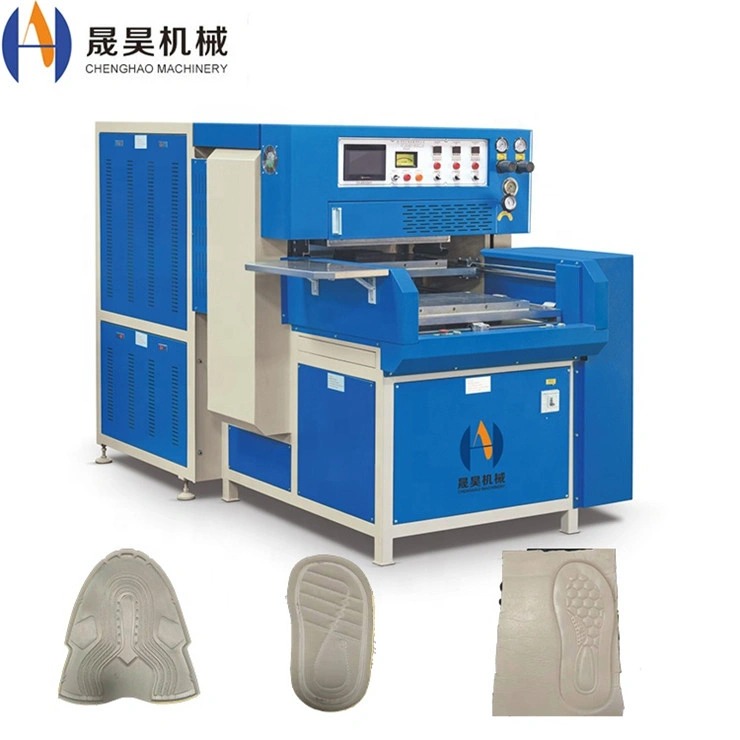
Chenghao Machinery provides high frequency welding equipment and customized plastic processing solutions for manufacturers with different production requirements.
Its equipment solutions cover applications involving:
-
PVC welding
-
High frequency sealing
-
Blister packaging
-
Specialized plastic processing
For manufacturers experiencing unstable welding quality, the right combination of machine configuration, electrode design, process parameters, and material control is essential.
Chenghao can support customers in evaluating production requirements and developing suitable equipment and tooling solutions.
Conclusion
Improving PVC welding quality requires more than simply increasing machine power. Reliable high frequency production depends on the interaction of material properties, welding parameters, pressure, electrode design, cooling, machine condition, and process control.
Manufacturers can improve welding consistency by:
-
Controlling material quality and thickness
-
Optimizing power and welding time
-
Maintaining stable pressure
-
Using properly designed electrodes
-
Checking tooling alignment
-
Controlling cooling conditions
-
Maintaining the machine regularly
-
Standardizing production parameters
A systematic approach can reduce defects, improve welding strength, and increase production efficiency.
Contact Chenghao Machinery to discuss your PVC welding requirements and explore a high frequency welding solution designed for your specific product and production process.