
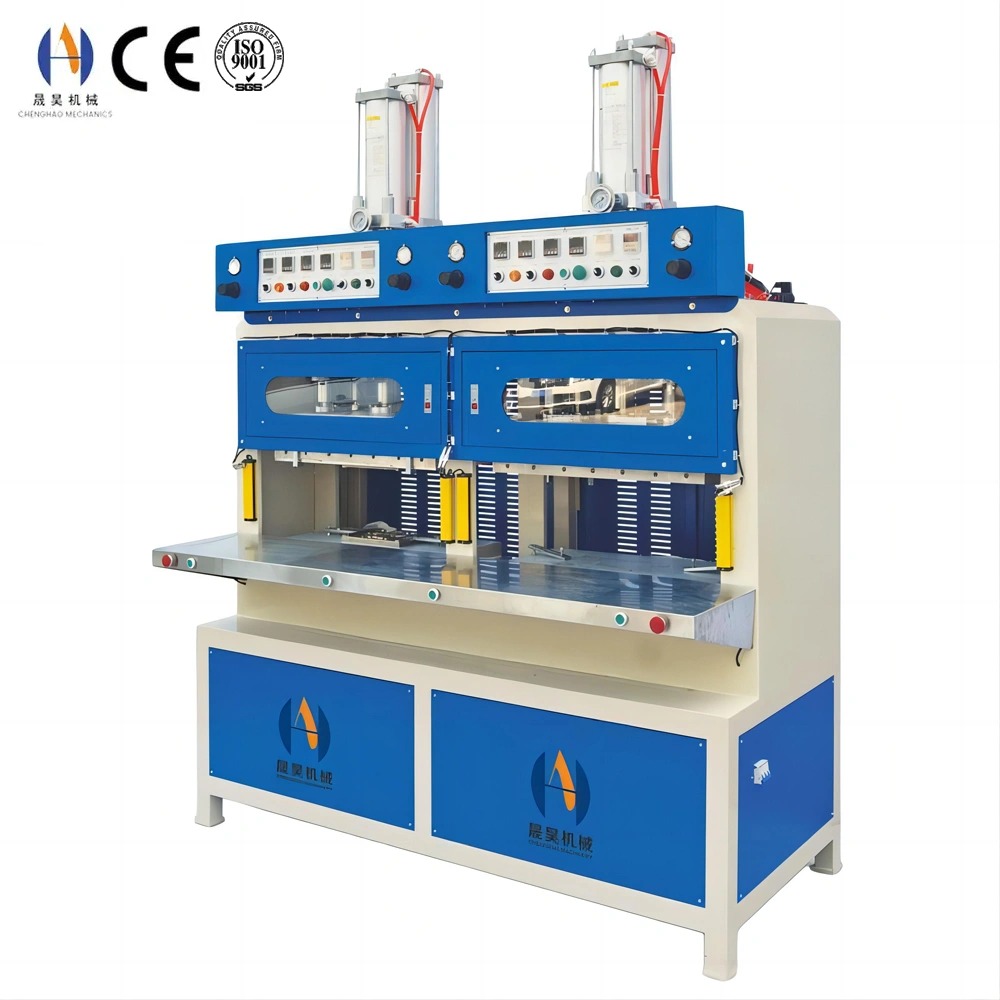
In modern manufacturing, precision, repeatability, and efficiency are essential for producing high-quality industrial products. A mould machine is a key piece of equipment used to shape raw materials into accurate and consistent forms through controlled pressure, heat, or forming processes. It plays a vital role in industries that require mass production with strict dimensional accuracy.
From packaging and automotive components to medical and consumer goods, mould machines provide stable and scalable production solutions.
What Is a Mould Machine?
A Mould Machine is industrial equipment designed to shape materials—typically plastics, rubber, or composite materials—using a predefined mold. The material is processed under controlled conditions such as heat, pressure, or vacuum forming, allowing it to take the exact shape of the mold cavity.
Common processes include:
- Compression molding
- Vacuum forming
- Pressure forming
- Thermoforming
- High-frequency mold shaping (in specialized systems)
How a Mould Machine Works
The working principle of a Mould Machine generally follows four steps:
- Material is placed or fed into the machine
- Heat or softening process is applied
- Mold closes and pressure is applied
- Material cools and solidifies into final shape
This controlled cycle ensures consistent product quality across large production runs.
Why Mould Machines Are Essential in Industry
A Mould Machine is widely used because it solves key manufacturing challenges.
High Dimensional Accuracy
Each product is formed according to the mold, ensuring identical size and shape across all units.
Stable Mass Production
Mould machines are designed for continuous operation, making them ideal for large-scale manufacturing.
Reduced Material Waste
Precise forming minimizes excess material and improves cost efficiency.
Strong Structural Consistency
Products maintain uniform strength and quality due to controlled forming conditions.
Applications of Mould Machines
Mould Machines are used in a wide range of industries:
Packaging Industry
Used for blister trays, protective packaging, and plastic containers with precise shaping requirements.
Automotive Industry
Produces interior panels, trims, covers, and structural plastic components.
Medical Industry
Used for sterile trays, device housings, and precision medical packaging.
Electronics Industry
Forms protective housings, casings, and insulation components for electronic devices.
Consumer Products
Used in storage boxes, household items, and plastic accessories requiring consistent shapes.
Key Features of Mould Machines
Modern Mould Machines are designed for performance and reliability:
- High-strength machine frame
- Precision temperature control system
- Stable pressure regulation
- Automated cycle operation
- Custom mold compatibility
- PLC control system integration
- Safety protection systems
These features ensure smooth production and consistent output quality.
Types of Mould Machines
Different production needs require different machine configurations:
Vacuum Mould Machines
Use suction to shape heated plastic sheets into molds.
Pressure Mould Machines
Apply additional force for more detailed and precise forming.
Compression Mould Machines
Use direct pressure for thick or dense materials.
Thermoforming Machines
Heat and form plastic sheets for packaging applications.
Factors Affecting Moulding Quality
Several variables influence the performance of a Mould Machine:
- Temperature control accuracy
- Pressure consistency
- Mold design quality
- Material type and thickness
- Cooling time
Proper control ensures high-quality and defect-free products.
How to Choose the Right Mould Machine
When selecting a Mould Machine, manufacturers should consider:
Production Requirements
Define output volume and cycle time needs.
Product Complexity
More detailed products require higher precision systems.
Material Compatibility
Different materials require specific temperature and pressure settings.
Automation Level
Choose between semi-automatic and fully automatic systems.
Supplier Capability
Reliable manufacturers ensure better machine stability and support.
Advantages Over Manual Forming
Compared to manual or basic forming methods, a Mould Machine offers:
- Higher production speed
- Better consistency
- Reduced labor dependency
- Improved product quality
- Scalable manufacturing capacity
These advantages make it essential for industrial production environments.
Future Development of Mould Machines
The Mould Machine industry is evolving toward:
- Fully automated smart production lines
- AI-based process optimization
- Energy-efficient heating systems
- Digital monitoring and control
- Integrated manufacturing systems
These advancements improve productivity and reduce operational costs.
Conclusion
A Mould Machine is a core piece of industrial equipment for precision forming and mass production. It ensures consistent quality, efficient output, and flexible application across packaging, automotive, medical, electronics, and consumer goods industries.
As manufacturing continues to advance, moulding technology will remain essential for producing accurate, reliable, and scalable products.