
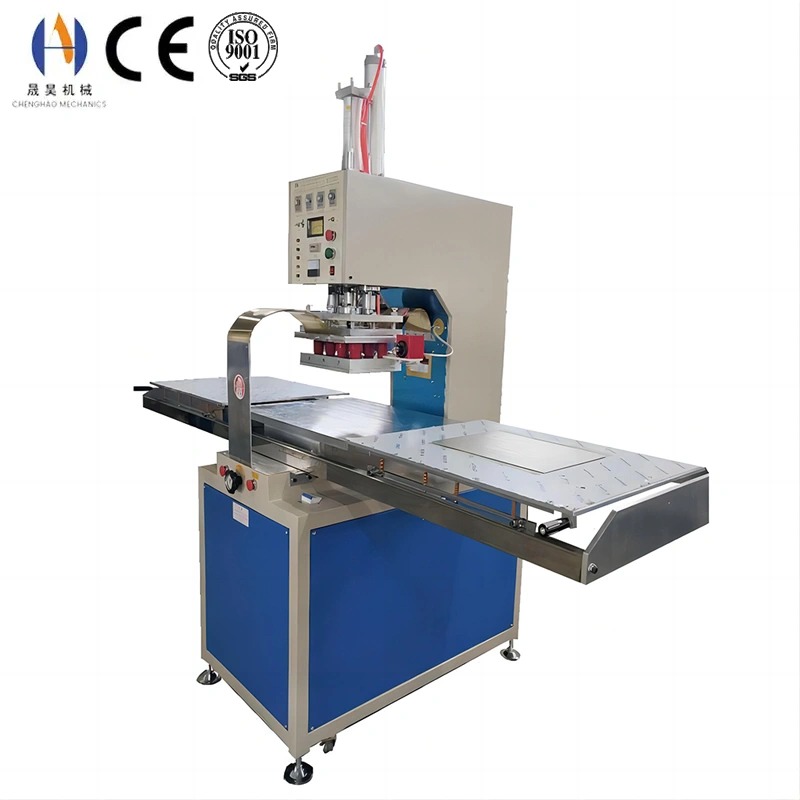
In modern industrial production, welding machines are essential equipment used to join materials with precision, strength, and consistency. From plastics to metals, welding technology enables manufacturers to build durable products while maintaining high efficiency and scalable output.
With increasing automation and quality requirements, welding machines have become a core part of production lines across multiple industries.
What Are Welding Machines?
Welding Machines are industrial devices designed to join materials using heat, pressure, vibration, or electromagnetic energy. Depending on the application, they can be used for metal welding, plastic welding, or specialized industrial bonding processes.
In the context of modern manufacturing, welding machines are often categorized into:
- Plastic welding machines
- Metal welding machines
- High frequency welding machines
- Ultrasonic welding machines
- Hot air and hot plate systems
Each type serves different industrial requirements.
How Welding Machines Work
The working principle of Welding Machines depends on the technology used, but the core process usually includes:
- Energy generation (heat, vibration, or electromagnetic waves)
- Material activation or softening
- Pressure application
- Fusion and cooling
This process creates a permanent bond between materials, ensuring structural integrity.
Main Types of Welding Machines
Ultrasonic Welding Machines
Use high-frequency vibration to create frictional heat for precise plastic joining.
High Frequency Welding Machines
Use electromagnetic energy for fast and strong sealing of PVC and TPU materials.
Hot Plate Welding Machines
Use heated plates to melt and join thick plastic components.
Metal Welding Machines
Include arc welding, TIG welding, and laser welding for metal fabrication.
Why Welding Machines Are Essential in Industry
Welding Machines are widely used because they provide key manufacturing advantages.
Strong and Durable Bonds
Welded joints are often stronger than mechanical connections.
High Production Efficiency
Automated welding systems reduce cycle time and increase output.
Versatile Material Compatibility
Suitable for plastics, metals, and composite materials.
Reduced Assembly Complexity
Eliminates the need for screws, adhesives, or additional connectors.
Applications of Welding Machines
Welding Machines are used in nearly all industrial sectors:
Automotive Industry
Used for body parts, interior components, and structural assemblies.
Medical Industry
Used for sterile packaging, device housings, and disposable products.
Packaging Industry
Used for sealing blister packs, containers, and protective packaging.
Electronics Industry
Used for battery packs, plastic housings, and component assembly.
Construction and Manufacturing
Used for metal structures, pipes, and heavy-duty equipment.
Key Factors Affecting Welding Performance
Several factors determine the effectiveness of Welding Machines:
- Material type and thickness
- Welding temperature or energy level
- Pressure and timing control
- Machine precision and stability
- Joint design quality
Proper optimization ensures consistent and high-quality results.
Advantages of Using Welding Machines
Compared to traditional joining methods, Welding Machines offer:
- Stronger structural bonding
- Faster production speed
- Lower labor requirements
- Improved product durability
- Cleaner manufacturing process
These benefits make welding technology essential in modern production systems.
Features of Modern Welding Machines
Advanced Welding Machines include:
- Digital control systems
- Automated operation modes
- Precision energy regulation
- Custom tooling compatibility
- Safety protection systems
- Integration with production lines
These features improve both efficiency and reliability.
How to Choose the Right Welding Machine
When selecting Welding Machines, consider:
Material Requirements
Different machines are designed for specific materials.
Production Scale
High-volume manufacturing requires automated systems.
Precision Level
Complex products require high-accuracy control systems.
Process Type
Choose between ultrasonic, high frequency, or thermal welding based on application.
Maintenance and Support
Reliable technical support ensures long-term machine stability.
Future Trends in Welding Machines
The Welding Machine industry is evolving toward:
- Fully automated smart production systems
- AI-driven process control
- Real-time monitoring and quality inspection
- Energy-efficient welding technologies
- Integration with industrial robotics
These advancements support smarter and more efficient manufacturing.
Conclusion
Welding Machines are a fundamental part of modern industrial manufacturing, enabling strong, efficient, and precise material joining across multiple industries. Their versatility and automation capabilities make them essential for automotive, medical, packaging, electronics, and metal fabrication applications.
As manufacturing continues to evolve, welding technology will remain a key driver of productivity, quality, and innovation.